FUE
Follicular Unit Extraction — individual follicular units are harvested from the donor area. The base technique that the other variants build on.
Istanbul · 3-day trip
We guide you through the entire process: photo analysis by the clinic's hair transplant surgeon, choosing a date, flights, hotel, transfers and an interpreter in the room — and for 18 months afterwards we stay in touch to support you through recovery.
Flymedica is not a medical provider. We do not qualify patients for a procedure, we do not decide on the method or the number of grafts, and we are not responsible for medical decisions. That's the clinic's job. We act as an intermediary throughout the whole process: we pass on treatment plans and documents from the clinic, make bookings on your behalf, and handle the rest of the logistics — scheduling, transfers, the hotel, an interpreter at the clinic and keeping your paperwork in order.
We put this at the top of the page rather than in the fine print in the footer, because it's the most common misunderstanding in medical tourism — and the most common source of disappointment.
Schedule
This is what a standard hair transplant trip looks like. Your host always tells you the exact plan for the next day the evening before.
Poland Istanbul to
Standard plan · DHI
A driver picks you up from the airport and takes you to the hotel. The rest of the day is yours: dinner, a walk, rest. Nothing else happens that day.
A meeting with your host, who also acts as your interpreter. The hair transplant surgeon assesses your case again in person, and together you settle on the hairline, method and number of grafts. Then comes a health questionnaire, a blood test, and the procedure itself under local anaesthesia with light sedation — lasting 5 to 9 hours. During the procedure a platelet-rich plasma (PRP) treatment is also carried out, which improves patient comfort and supports healing.
You return to the clinic: the dressings come off and you get your first hair wash, with instructions on how to do it yourself at home. You receive a set of aftercare products and a post-procedure certificate — then it's your return flight to Poland. If you'd like to stay longer and see Istanbul, you can extend your stay independently (or arrive earlier, before the procedure, to sightsee).
The schedule, qualification and final number of grafts depend on the clinic's decision after the consultation.
Before you buy a ticket
You don't need an appointment, tests or a deposit to find out whether the procedure makes sense in your case.
Techniques
Which technique is possible in your case is decided by the hair transplant surgeon after analysing the type of hair loss, the potential of the donor area and your aesthetic expectations.
The main limitation of the procedure isn't the size of the bald area, but the quality and capacity of the donor zone. That's why the number of grafts shouldn't be set based on advertising or your own calculations. The specialist assesses hair density, shaft thickness, type of hair loss, scalp condition and the safety of harvesting follicles — and only then proposes a method and an indicative range.
Follicular Unit Extraction — individual follicular units are harvested from the donor area. The base technique that the other variants build on.
Follicles are placed using Choi Pen implanters, allowing control over the direction, angle and depth of implantation. Useful for rebuilding the hairline and densifying selected areas — its suitability is always assessed by a specialist.
A variant for people who want to keep their hairstyle while healing. Not every case qualifies — suitability is determined by the clinic based on a medical assessment.
Clinics also offer other procedures, including beard and eyebrow transplants. There is no single best method for everyone — what matters is matching the technique to the donor zone and the goal of the procedure.
Before you fly
The initial consultation is based on current photos taken from several angles, together with information about your age, history of hair loss, illnesses and medications you take. The clinic determines whether the procedure is possible and suggests a method and an indicative scope for the transplant.
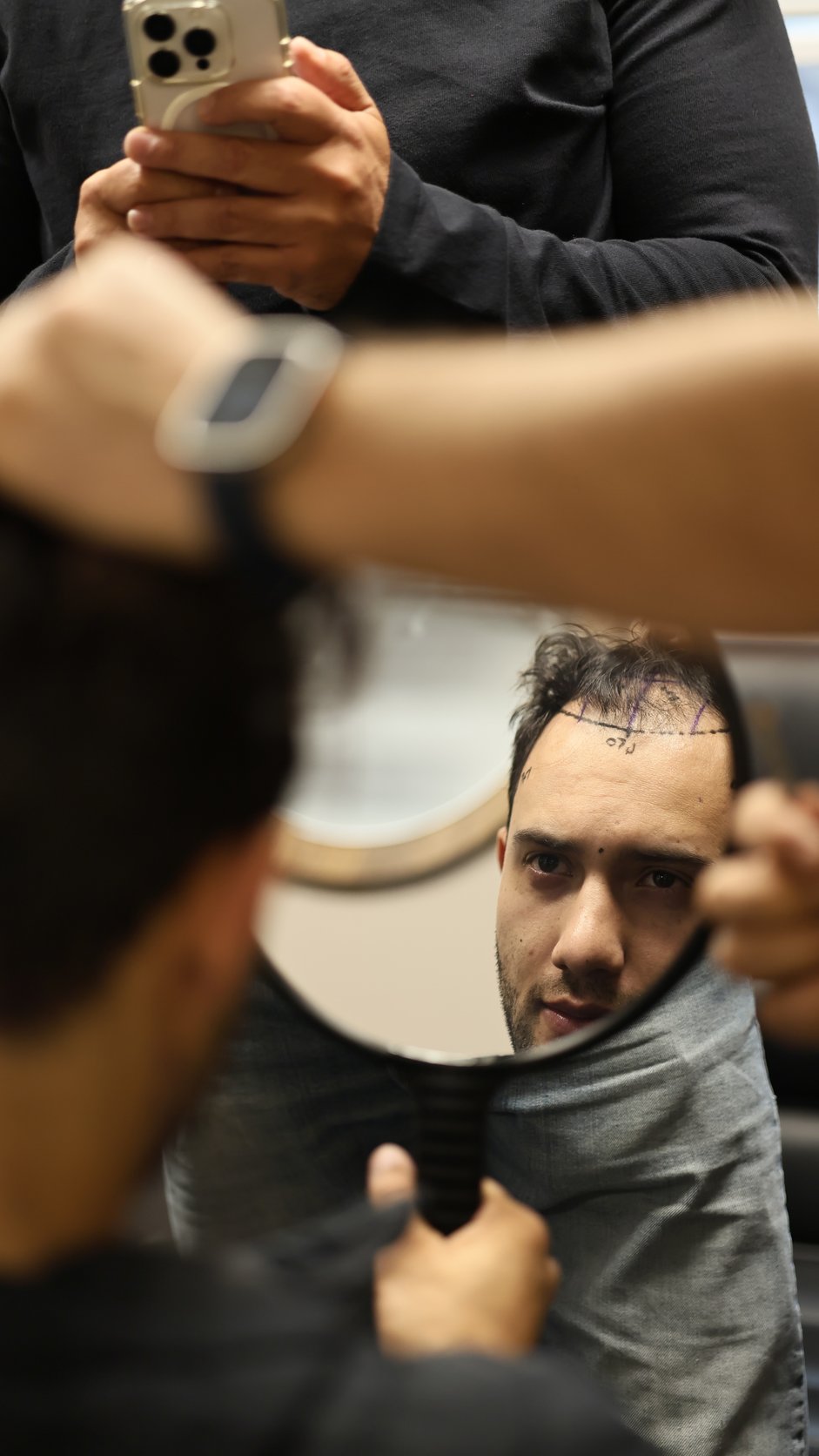
The final hairline is only planned by the hair transplant surgeon on site, at the clinic. It should match your facial proportions, age and the capacity of the donor zone. A hairline set too low can look unnatural and needlessly use up a limited number of grafts, which cannot be harvested a second time from the same place.
After the procedure you'll have scabs, redness and temporary swelling. Transplanted hairs usually go through a shedding phase, and new growth begins gradually after a few months. The result is usually assessed after 12 months, and in the crown area — sometimes even later.
The clinic provides guidance on washing, sleep, exertion, sun exposure and the use of products. Flymedica helps pass your questions on to the clinic.
Indicative pricing
The amounts below are the range where the conversation starts. The final price and scope of services are set by the clinic after the consultation, and Flymedica passes that information on to you.
We quote “from” prices, meaning the lowest possible prices after available discounts and promotions are taken into account. The final price depends on the treatment plan and the terms of the specific offer.
Individual trip
from €3,570 €4,110
Individual trip · Long DHI
from €3,770
| Country | Billing method | Indicative cost |
|---|---|---|
| Poland | PLN 7–17 per follicle | PLN 28,000 – 68,000 |
| United Kingdom | Average approx. GBP 3.25 per follicle | PLN 50,000 – 81,000 |
| Germany | Approx. EUR 2–3.5 per follicle / clinic packages | PLN 37,000 – 65,000 |
| Turkey (Flymedica) | Package for up to 5,000 grafts; price depends on the method | DHI from €3,570 Long DHI from €3,770 |
Prices for the United Kingdom and Germany are indicative conversions based on 2026 market rates (approx. GBP 2.50–4 and EUR 2–3.5 per follicle respectively), converted at the NBP exchange rate of 18 August 2026 (1 GBP ≈ PLN 5.05, 1 EUR ≈ PLN 4.32). Neither country has fixed package pricing like Turkey does — the final price depends on the clinic and the surgeon.
You'll find packages on the market cheaper than ours — we're not competing for the lowest price. What you get in return is listed in the how we compare section.
Prices do not include flight tickets. The amounts given are for information only and do not constitute a commercial offer within the meaning of Article 66 §1 of the Polish Civil Code.
How we compare
And that's not the game we're playing. On the market for trips to Turkey you can find packages cheaper than ours. Below we list what you get in return — point by point, because these are exactly the places where medical tourism most often falls short.
We're not comparing ourselves to any named competitor. The points above refer to documented, recurring problems in the medical tourism market, described in the press and by Polish specialists who treat patients after procedures performed abroad.
After you've done your homework
Most offers sound similar: a good clinic, an attractive price and good care. The differences only come out once you ask specific questions about documents, accountability and help after you return. Ask every company you're considering these questions — not just us.
The package includes contact throughout the hair-growth period — we don't end the relationship on the day you fly out of Turkey.
Your report goes to Flymedica, and the clinic decides on next steps. A free follow-up procedure or an additional consultation are possible once the clinic's surgeon has assessed the report.
We provide the scope, the following steps, recommendations and formal information in English. Before you decide, you know what the clinic is responsible for and where Flymedica helps.
You receive the package scope before booking. You're comparing the procedure, tests, hotel, transfers, interpreter and aftercare — not just a procedure price taken out of context.
You know exactly who will perform your procedure. At many clinics you don't know in advance which team you'll be assigned to. Flymedica gives you this information upfront: hair transplant surgeon Ibrahim Koç has exclusive rights to perform procedures on Flymedica patients — a specialist with more than 20 years of experience in medicine, over 15 of which he has dedicated solely to hair transplantation.
This is a question worth asking outright before booking at any clinic — at many places, the person featured in the marketing materials is only responsible for qualification or oversees a single stage, while the rest is carried out by a team without their involvement. At Ibrahim Koc Hair it's different: Ibrahim Koç personally leads the procedure from start to finish. The scope of his responsibility is also confirmed in the guarantee terms.
This comparison doesn't assume that any other company acts differently from what it states. It's a list of points worth confirming in writing before choosing any organizer or clinic.
Your hair transplant surgeon
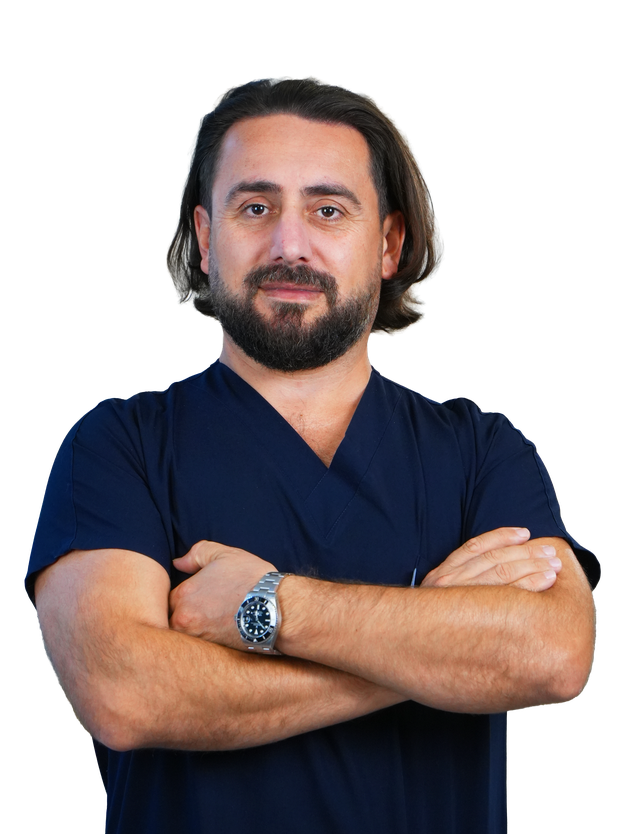
İbrahim Koç — more than 20 years of experience in medicine, over 15 years dedicated solely to hair transplantation.
He began his healthcare career in 2003 as a medical assistant at Acıbadem Hospital, gaining experience in intensive care and patient care. From 2006 to 2010 he worked as an operating room manager at Özel Duygu Hospital, assisting in procedures across general surgery, otolaryngology, ophthalmology, obstetrics, neurosurgery, urology and orthopaedics — experience that shaped his precision and technical versatility.
In 2011 he moved his career into aesthetic medicine and hair restoration, joining ESTEWORLD, one of Turkey's leading aesthetic centres. From 2015 he served as head of the hair transplant team at Dr. Serkan Aygın Clinic, where he personally performed thousands of procedures, including for many well-known public figures and content creators — among them actor Michał Koterski and journalist and Polsat Sport commentator Jerzy Mielewski, co-host of Ninja Warrior Polska, who spoke publicly about his procedure (including on the "Galileo" programme).
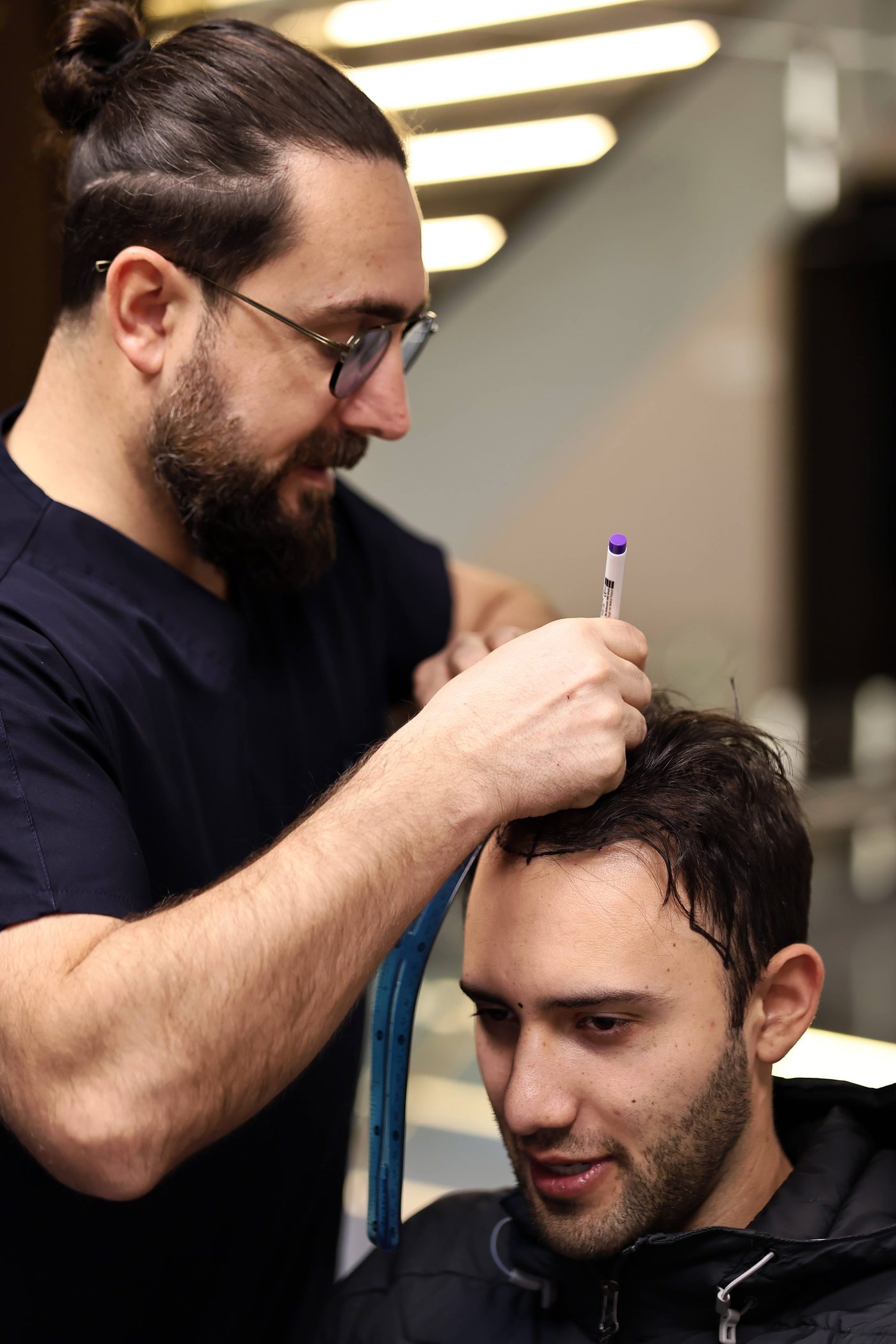
İbrahim Koç now runs his own clinic, Ibrahim Koc Hair, in Istanbul, where he specialises exclusively in the latest techniques — DHI and DHI without shaving (Long DHI). He personally performs every procedure, supported by a team of experienced assistants.
Combining more than twenty years of surgical experience with a long-standing, narrow specialisation in hair transplantation, İbrahim Koç brings together technical knowledge, precision and patient-centred care. Final qualification for the procedure and the choice of method are decided by the clinic after an individual assessment of the case.
Guarantee
The transplant guarantee is provided by Ibrahim Koç as the lead operator of the procedure at Ibrahim Koc Hair in Istanbul. It covers only the area of the scalp treated during the procedure — it does not cover untreated areas or further, natural hair loss resulting from genetic predisposition.
You report dissatisfaction with the result to Flymedica no earlier than 12 months and no later than 18 months after the procedure, attaching current photos of the entire scalp. If the assessment is positive, the follow-up procedure is free — you only cover airport transfers and accommodation.
Keeping the guarantee valid requires ongoing use of medication that inhibits further hair loss — finasteride 1 mg or dutasteride 0.5 mg — unless there are medical contraindications. These are prescription medicines; whether they're appropriate and safe in your case is decided by the hair transplant surgeon.
In justified cases, the clinic may order blood tests, including DHT levels, to verify that the prescribed medication is being taken. Refusing testing or failing to cooperate may result in loss of the guarantee, and the cost of the tests is borne by the patient.
We're telling you this here rather than in the terms and conditions, which people only read after the fact, because for some this is a reason not to go ahead. Better to know now.
A separate limitation applies to the crown of the head: it's an area with weaker blood supply, and you shouldn't expect the same results there as at the front of the head. This area requires stricter adherence to post-procedure recommendations.
Results
Patients' own photos, a few to several months after the procedure at a clinic in Istanbul, published with their consent.
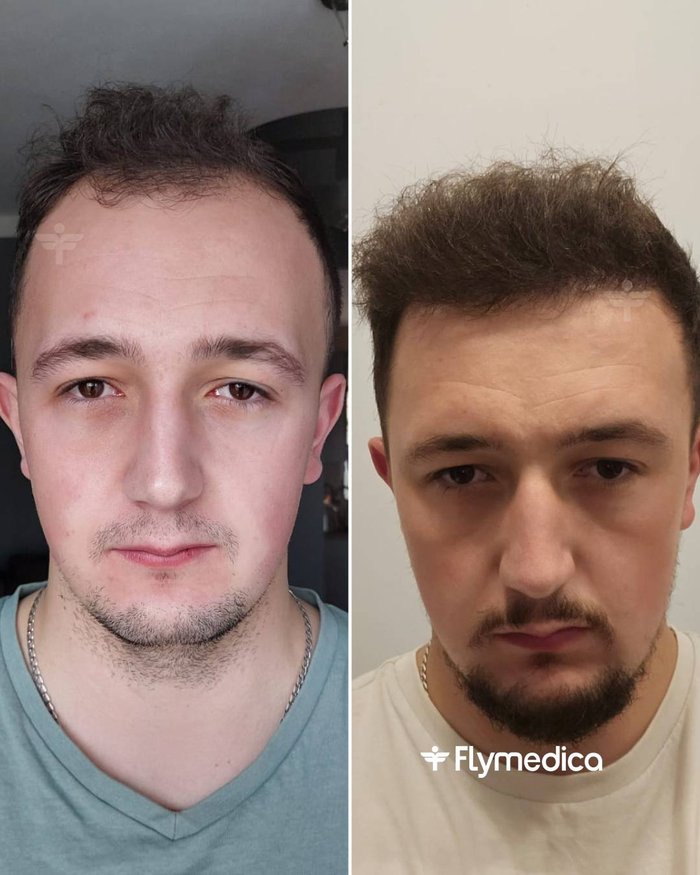
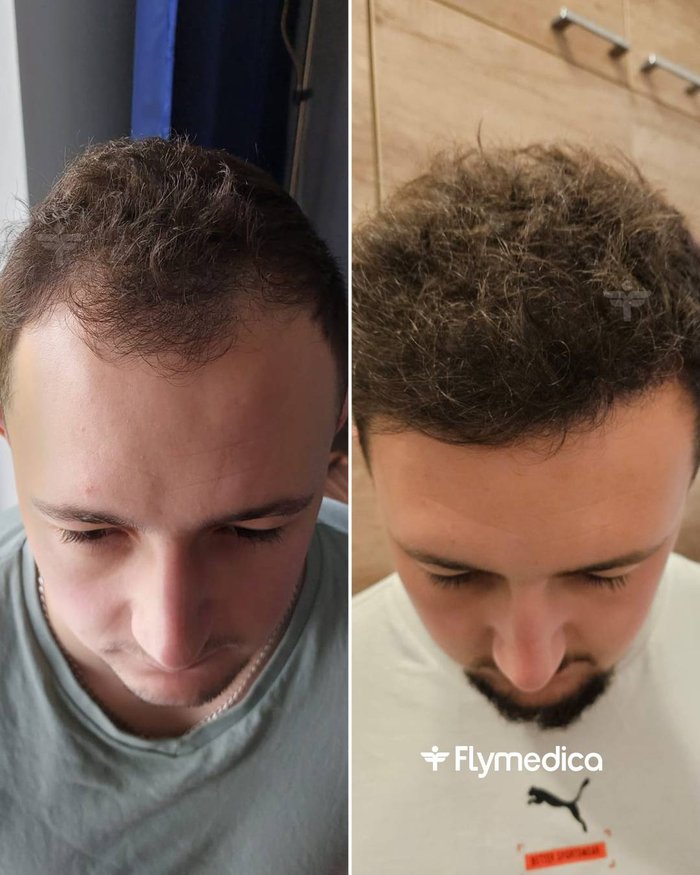
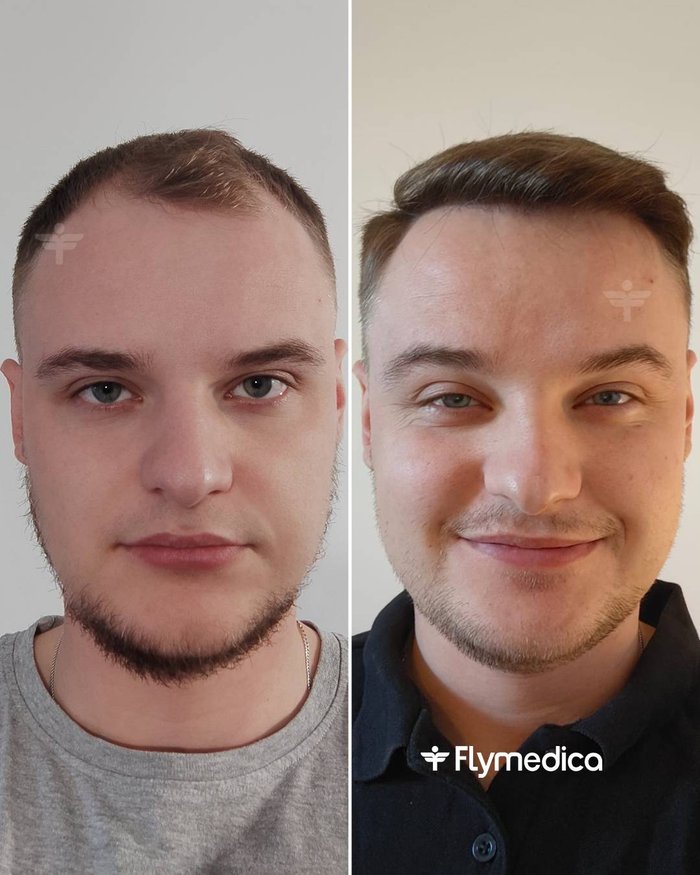
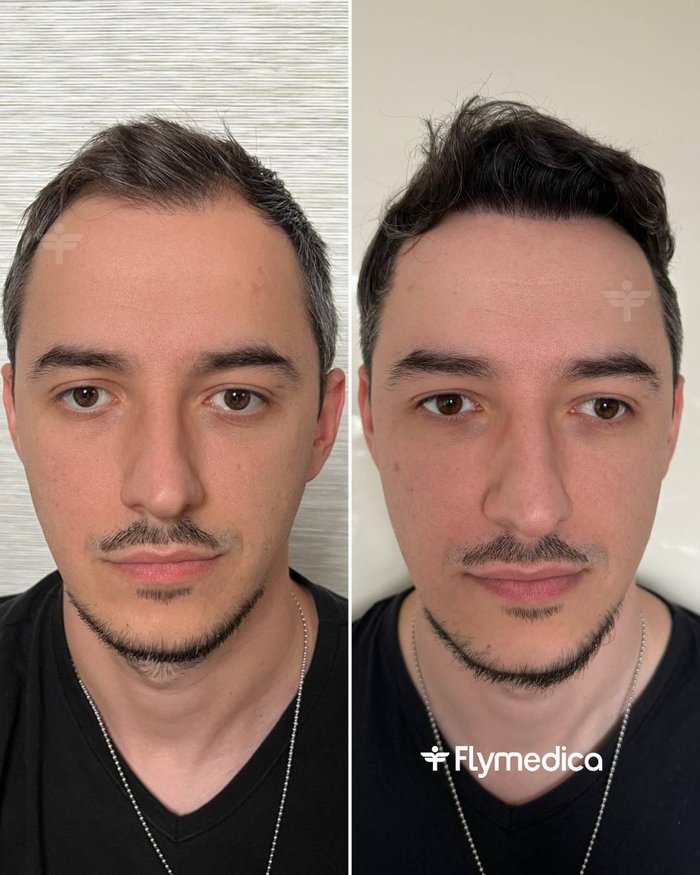
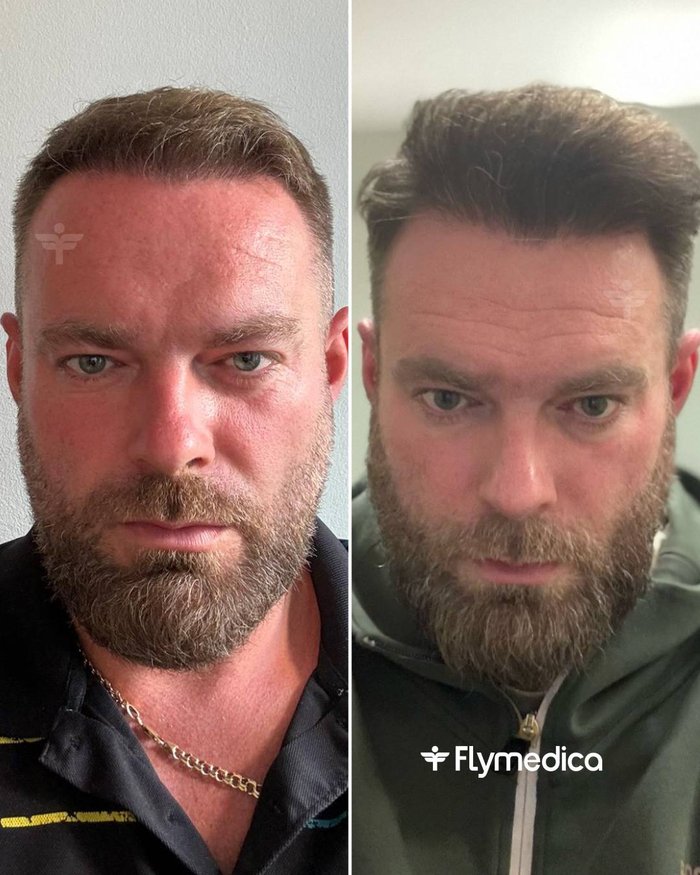
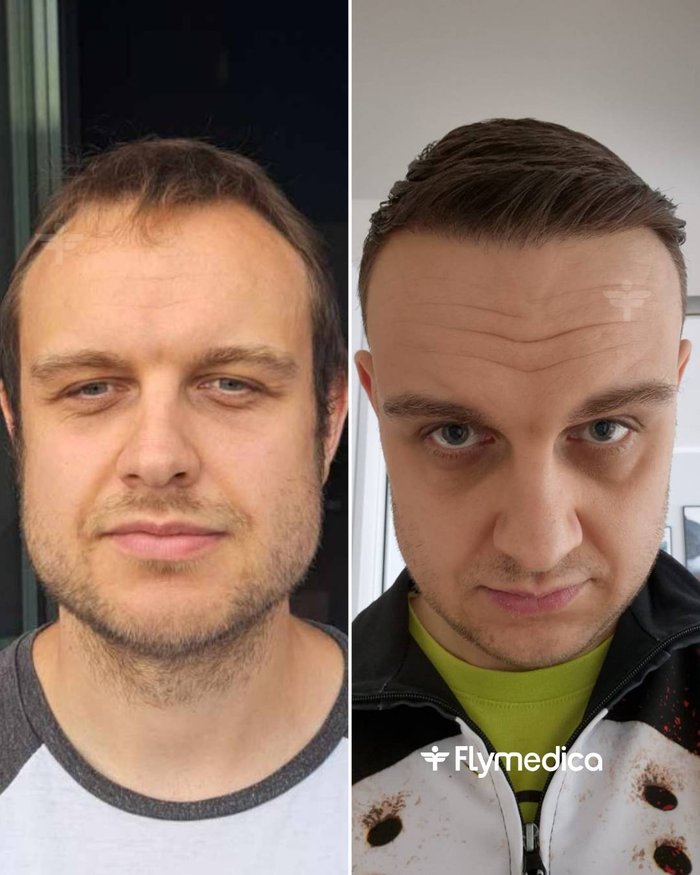
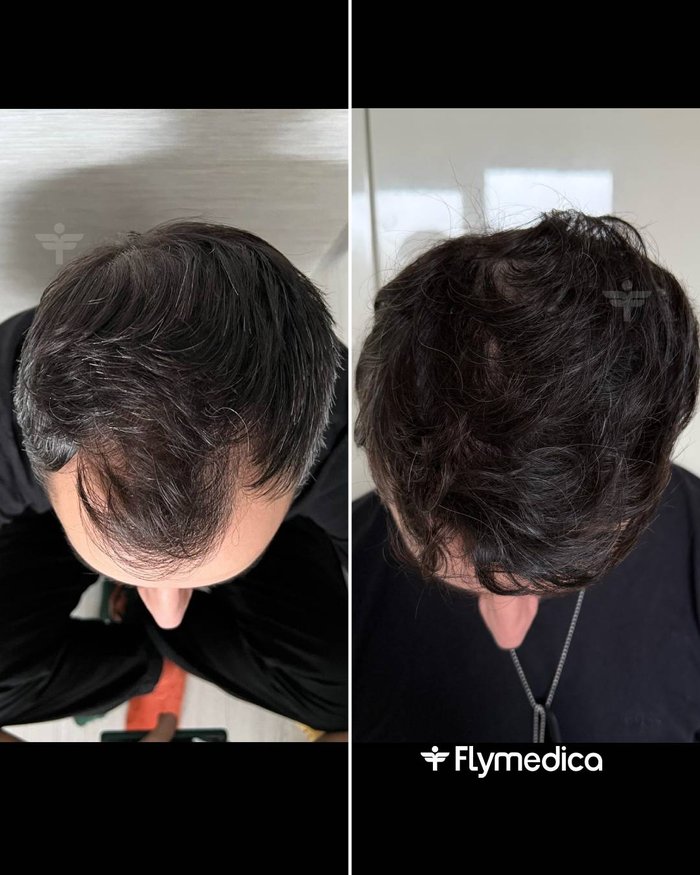
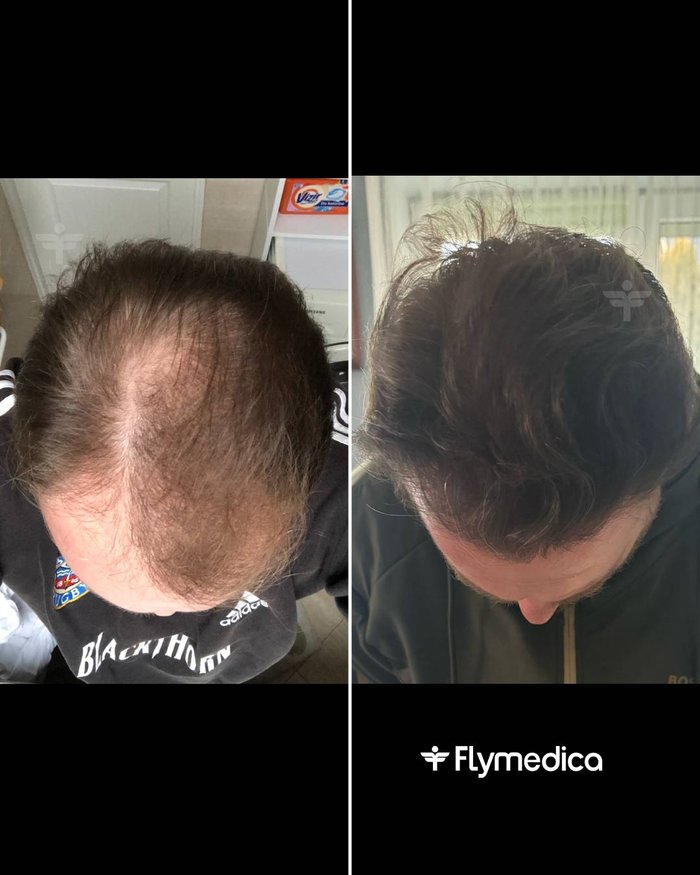
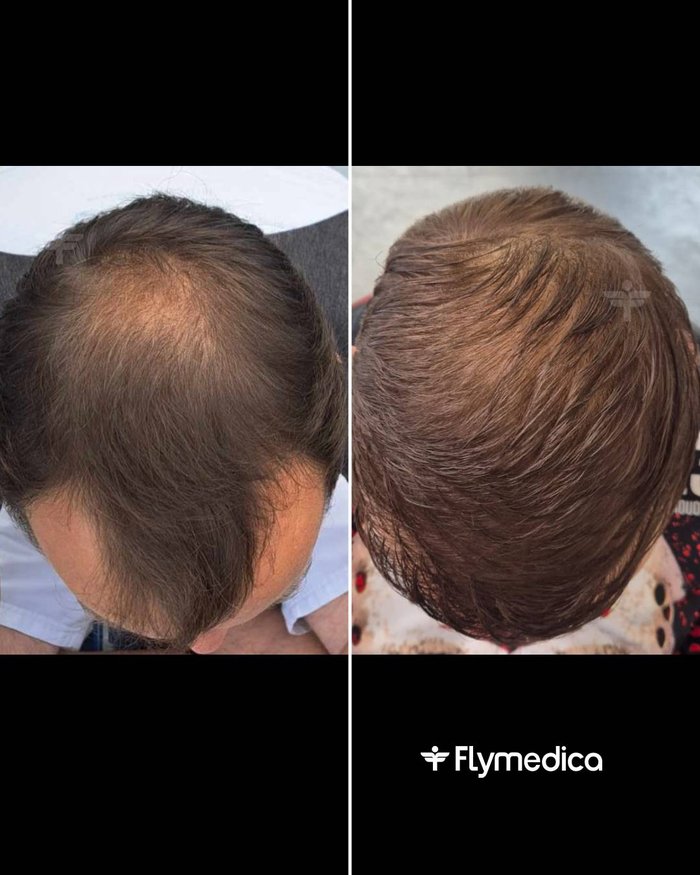
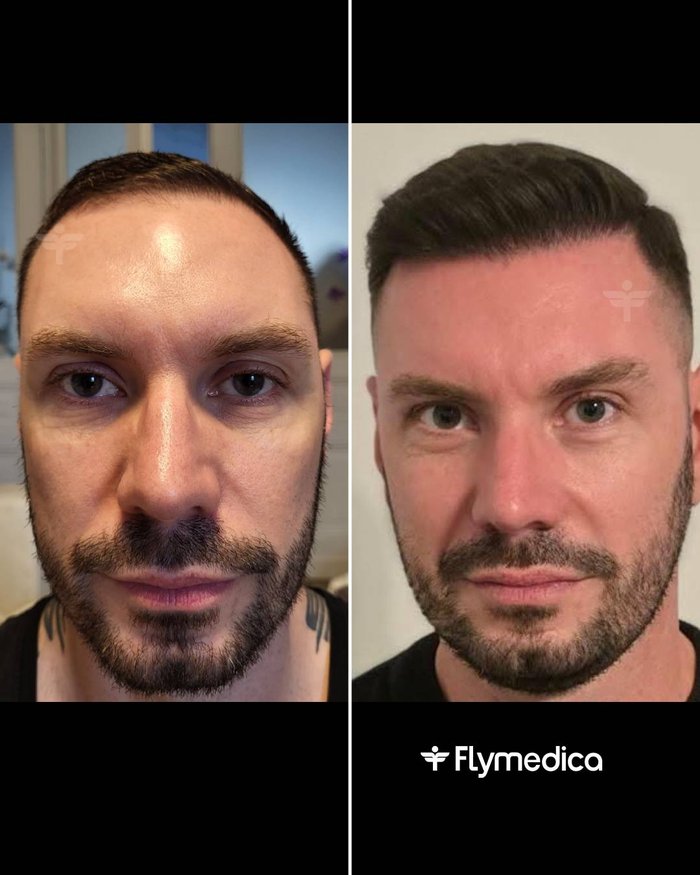
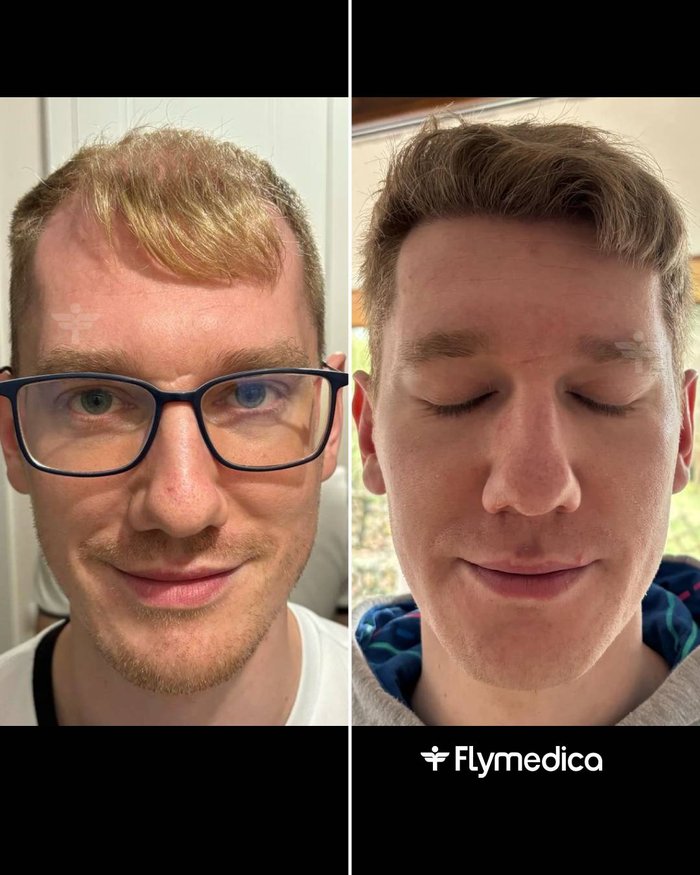
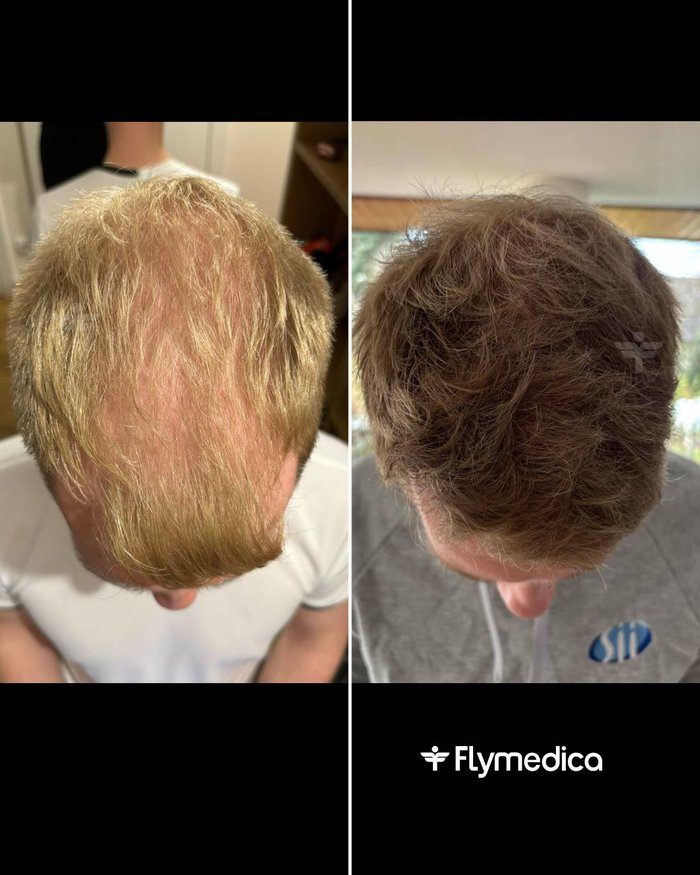
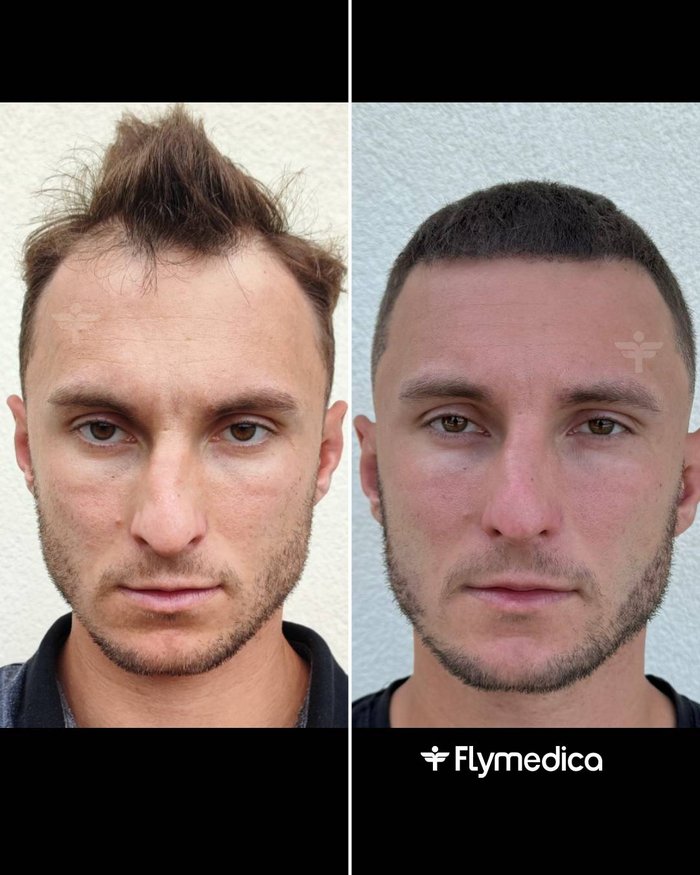
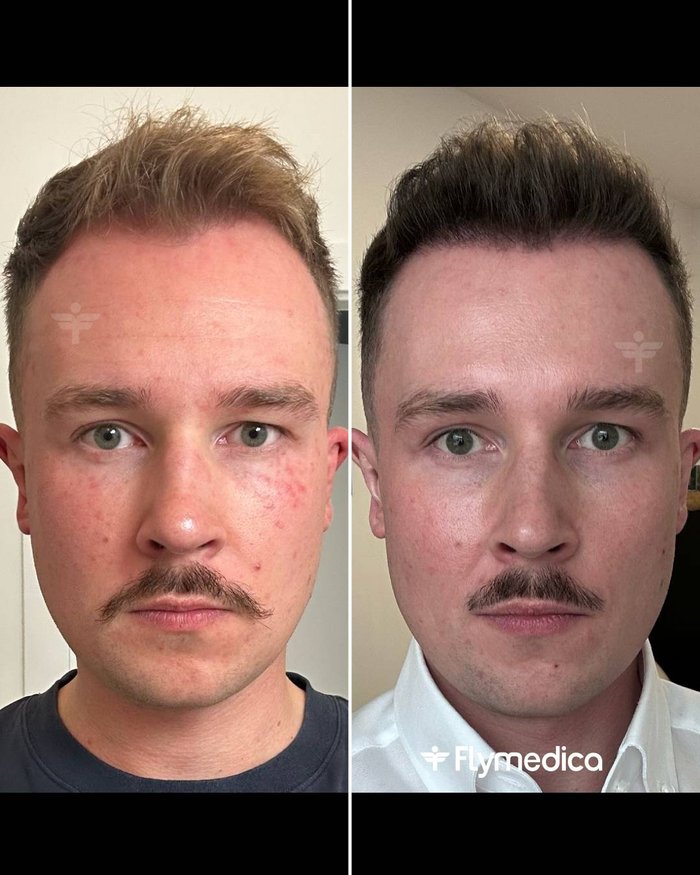
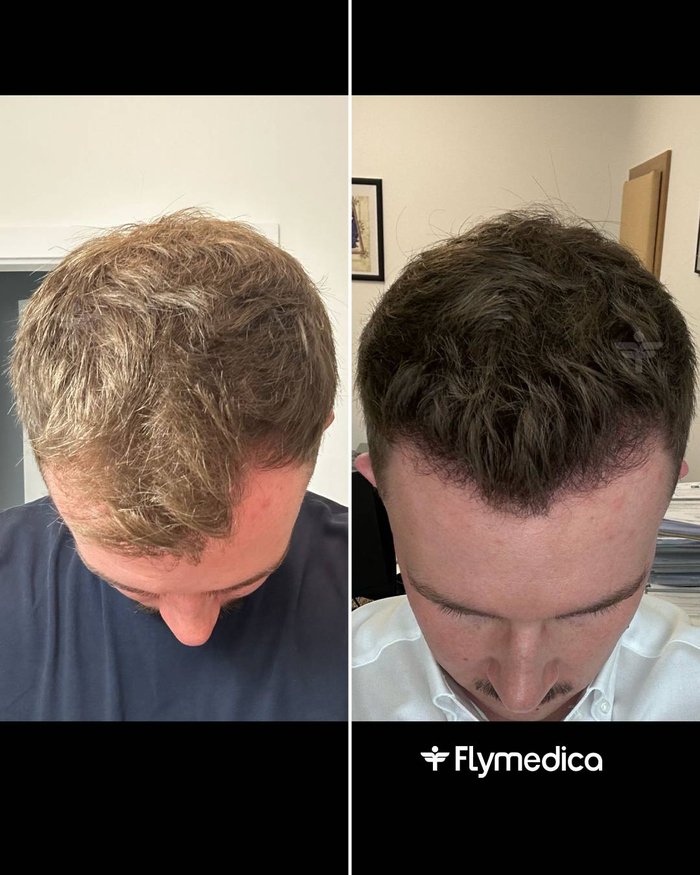
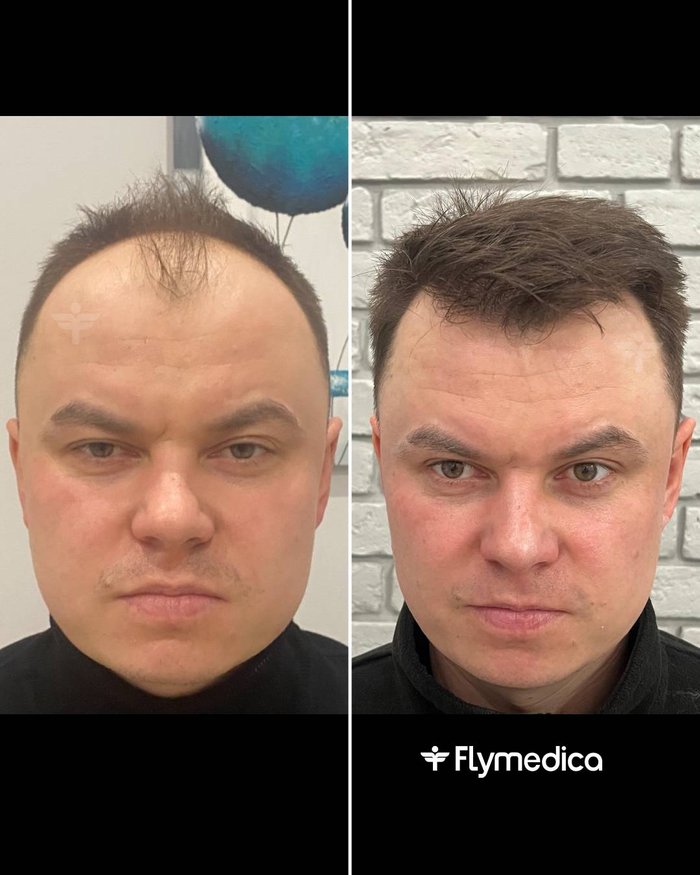
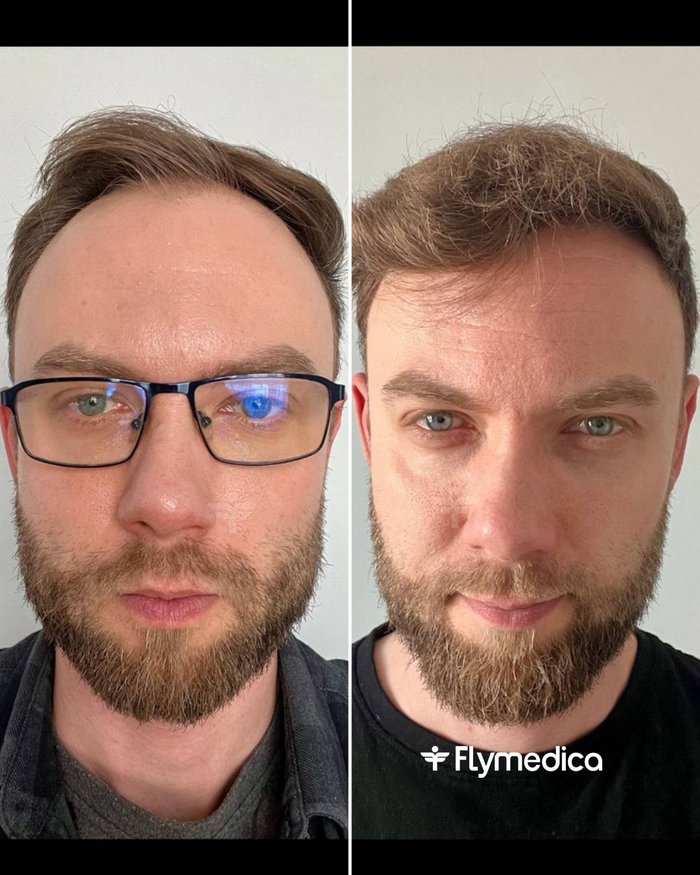
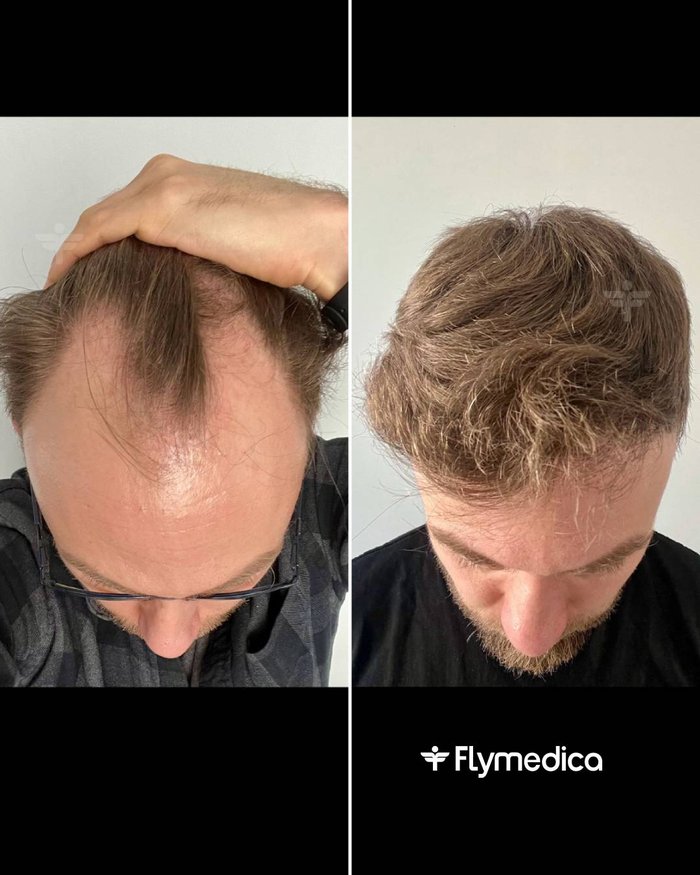
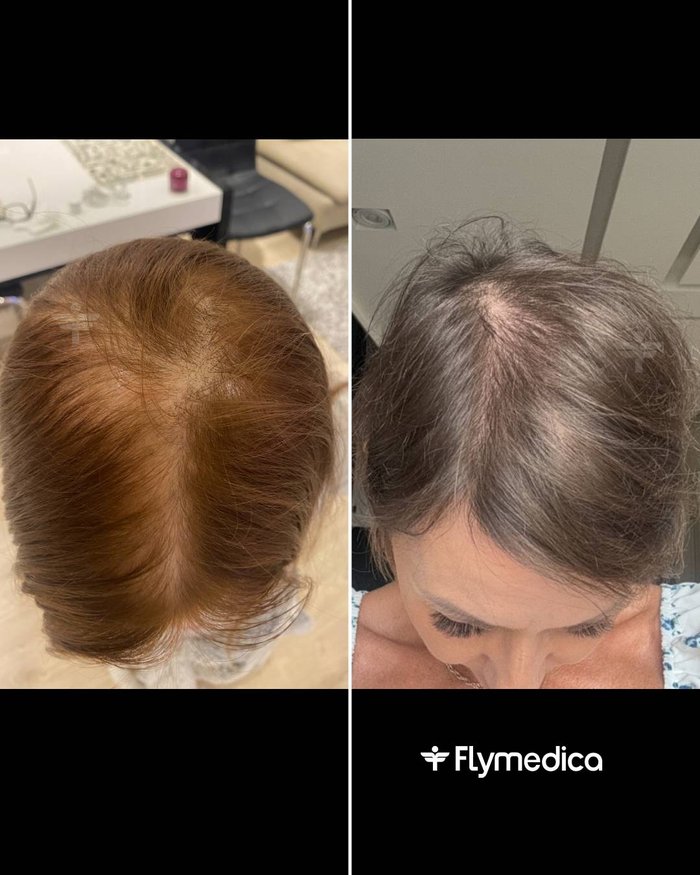
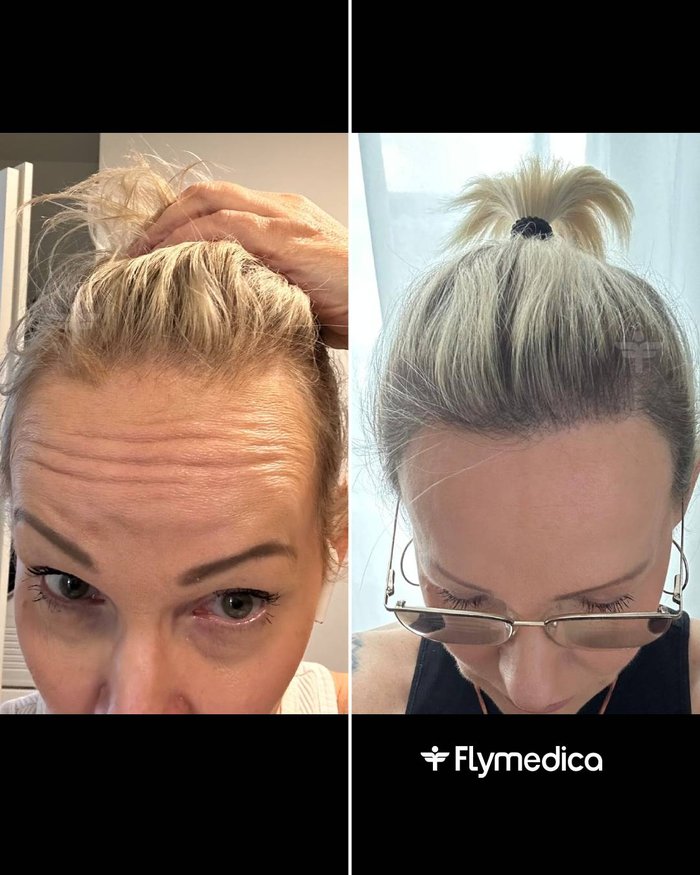
The photos show results for specific individuals and were published with their consent. Results vary and depend, among other things, on donor density, the method used and adherence to post-procedure recommendations.
Questions and answers
Flymedica packages in Turkey start at €3,570 for DHI and €3,770 for Long DHI (without shaving the recipient area). The price depends on the method and treatment plan. In Poland the cost is usually charged per follicle — from PLN 7 to 17, which for 4,000 grafts comes to PLN 28,000–68,000. The final price and scope of services are set by the clinic after the consultation.
The standard plan is 3 days, i.e. 2 hotel nights. The flight from Poland takes up to 2.5 hours. The exact schedule is set by the clinic depending on the case.
The procedure is performed under local anaesthesia. In the presence of an anaesthesiologist, light sedation is administered, making the anaesthetic injections less noticeable. The clinic discusses the details of the procedure and any possible discomfort with you beforehand.
Scabs in the recipient area usually heal within 10–15 days. The first two weeks are key for aftercare — if possible, it's worth limiting activity and staying home during this time. The clinic provides recommendations regarding work and sport.
Flymedica doesn't assess that. Send photos — the clinic's specialist analyses the case individually and can tell you about possible methods and an indicative number of grafts. Factors taken into account include general health, the capacity of the donor area, and the type and degree of hair loss.
The procedure may be considered for adults. The final decision always depends on an individual medical assessment carried out by the clinic.
A transplant on its own doesn't stop the balding process. Further hair loss can affect your own hair, and some transplanted grafts may not take. In addition, the popular belief that hair follicles keep their original properties after transplantation isn't always accurate (i.e. the claim that transplanted hair never falls out again). Although grafts taken from a DHT-resistant donor area may seem safe, in reality their behaviour in the new location is unpredictable. The clinic may recommend supportive treatment to help maintain the result — its scope and duration are always agreed with the clinic.
Yes. The surcharge for the same transfers and accommodation in the same room with breakfast is €40 for the whole 3-day stay (2 nights). The price may change — confirm it with your consultant.
No. The clinic only accepts cash in euros. 500 EUR banknotes are not accepted.
The package includes blood tests, the procedure using the chosen method, local transfers, a hotel with breakfast, an interpreter, and products recommended after the procedure. You buy flight tickets separately. The price of the procedure usually does not depend on the number of grafts up to the limit set by the clinic.
Yes. The guarantee is provided by the lead operator of the procedure at the partner clinic. You report dissatisfaction with the result to Flymedica no earlier than 12 months and no later than 18 months after the procedure, attaching current photos of the entire scalp. If the assessment is positive, the follow-up procedure is free — you only cover airport transfers and accommodation. Keeping the guarantee valid requires ongoing use of the prescribed medication, unless there are medical contraindications. We publish the full terms on the guarantee page.
For up to 18 months after the procedure you can contact Flymedica on organizational and informational matters. Medical recommendations and assessment of results are provided by the clinic — we help with contacting them. We remind you to send check-up photos on the right dates ourselves, so you meet the guarantee's conditions — you don't need to remember the deadlines or track them yourself.
It's not recommended to have a hair transplant while using isotretinoin (Accutane). Isotretinoin thins and dries out the skin, which can slow wound healing and increase the risk of scarring. Especially for fair-skinned patients, it's recommended to wait at least 12 months after finishing treatment before having the procedure.
According to medical guidelines, a hair transplant can be performed 6 months after finishing isotretinoin treatment, though it's better to wait a year. Because isotretinoin thins and dries out the skin, it can slow wound healing and increase the risk of scarring — especially for fair-skinned patients, it's safer to have the procedure after 12 months from the end of therapy.
How to reach us
We don't run regional walk-in offices. Our team works remotely, so we're available from anywhere in Poland — not just during one office's opening hours.
Call +48 699 585 105 — a consultant answers on business days, no need to book an in-person appointment.
Message +48 570 495 232 — send photos and questions straight from your phone.
Fill out the form on the site and send your photos and questions — you'll get a reply within 24 hours on business days.
Go to the formFollow @flymedica — procedure results, behind-the-scenes of the trips, and answers to questions in messages.
Message us on Facebook — we reply to messages on business days.
Company registered address (for correspondence only, not for in-person visits): Flymedica Sp. z o.o., ul. Jana Henryka Dąbrowskiego 77a, 60-529 Poznań.
Next step
The analysis is free and non-binding. We send confirmation of receipt within 24 hours on business days.
The content on this page is for informational purposes only and does not constitute medical advice. Each case requires an individual consultation. Treatment results depend on patient characteristics and are not guaranteed.