
Hair Transplant
Does Hair Grow Back in the Donor Area After a Hair Transplant?
Short answer: not where an entire follicular unit has been removed. After FUE, the skin heals and the follicles left behind keep growing. The donor area's appearance therefore depends on its starting density, even graft distribution and the future course of hair loss.
Published: September 8, 2026
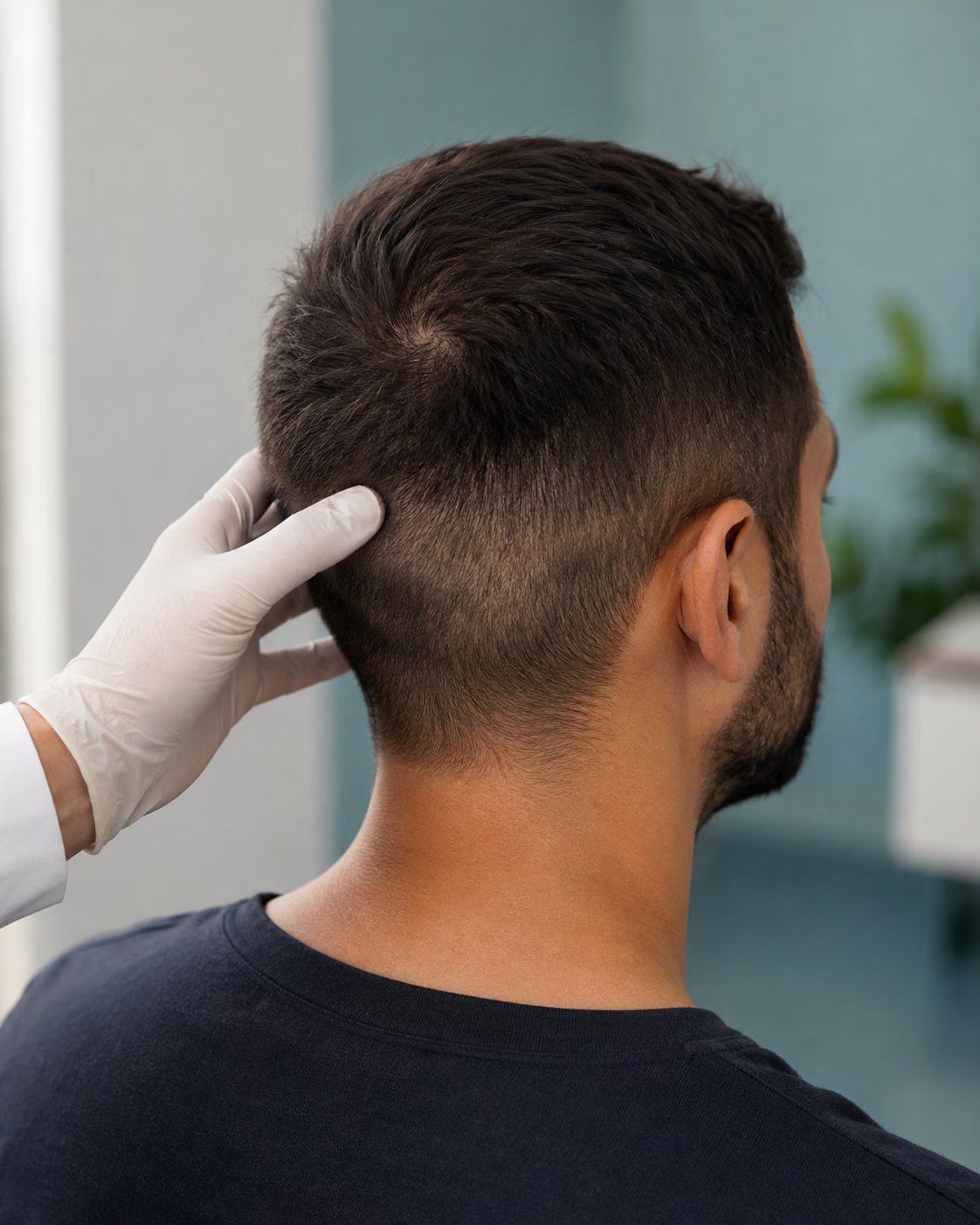
What grows back, and what does not?
In FUE, a doctor removes individual follicular units, or grafts, from the donor area and transfers them to the area that needs coverage. If the whole unit is removed, that same follicle does not recreate itself at the extraction point. Donor supply is therefore finite.
The hairs that were shaved but not extracted do grow back. At the same time, the small extraction sites close. Once the surrounding hair gains length, the donor area may look much fuller than it did immediately after the procedure.
Why can the back of the head look thinner just after FUE?
A close shave, redness, small crusts and the contrast between scalp and hair all affect the early appearance. Temporary shedding of retained donor hairs can also occur. This is often called donor shock loss or donor-site effluvium. A review of hair-transplant complications describes it as usually temporary, with growth recovering over the following months.
A photo taken a few days after surgery does not show the final donor density. Healing varies between people, and the operating clinic should provide the right reference point and follow-up schedule.
When can thinning remain visible?
Permanent thinning may occur when too many grafts are removed, when extraction points are too close together, or when harvesting is uneven. Overharvesting can create a patchy or “moth-eaten” appearance, especially with very short hair. FUE can also leave tiny dot scars. Nearby hair usually conceals them, but the technique is not entirely scarless.
Harvest location matters too. Hair taken outside the safer donor zone may miniaturise over time as androgenetic hair loss progresses. A sound plan should consider not only today's area of loss but also possible needs in later years.
How does a doctor protect the donor area?
There is no single safe graft number for every patient. The doctor assesses density at several points, shaft diameter, hairs per follicular unit, miniaturisation, the boundaries of the stable donor zone, scalp health and previous procedures. The likely progression of hair loss and the patient's preferred hairstyle also matter.
Hair-transplant practice guidelines stress examining and documenting the donor area before extraction and avoiding overharvesting. This is why a promise of an exceptionally high graft count is not, by itself, evidence of a better plan.
What should you ask before the procedure?
- Were density, hair diameter and miniaturisation assessed at several points?
- How many grafts are planned, and what is that number based on?
- Will extraction be distributed evenly within the safer donor zone?
- Who performs the key extraction and implantation stages?
- How will healing be reviewed after you return home?
Before deciding, it also helps to understand the difference between FUE and DHI, how a clinic assesses eligibility and how to choose a clinic in Turkey.
When should you contact the clinic after surgery?
Follow the instructions provided by your clinic. Do not wait for a routine review if pain or swelling is increasing, redness is spreading, or you develop pus-like discharge, fever, darkening skin or another sudden deterioration. Persistent patchy thinning or altered sensation should also be assessed by a doctor rather than self-diagnosed from online photos.
For a broader overview, read our guide to aftercare in the first days and weeks after a hair transplant.
The plan must allow for the future
Flymedica coordinates communication and treatment logistics, but it does not determine eligibility or set the graft count. A doctor at the independent clinic assesses the donor area and is responsible for the medical plan. Results are not guaranteed, and harvesting capacity depends on individual anatomy and treatment history.
Medical sources
- Hair Transplant Practice Guidelines, Journal of Cutaneous and Aesthetic Surgery.
- Complications in Hair Transplantation, review of FUE and FUT complications.
- Donor site healing in follicular unit extraction hair transplantation, 2025 systematic review.
This content is for information only and is not medical advice. Eligibility, graft count and postoperative care are determined by the doctor at the clinic providing treatment. Results and healing times vary.
Questions and answers
Frequently asked questions
Does every extracted graft leave a bald spot?
The same follicle does not regrow where a whole follicular unit was removed. With correctly spaced extraction points, neighbouring hair usually reduces their visibility. The cosmetic effect depends on density, shaft thickness, skin colour and hairstyle length.
Is FUE completely scarless?
No. FUE can leave very small dot scars. They are usually less noticeable than a linear scar, but they may show with a very short haircut.
Can grafts be harvested from the same area again?
Sometimes, but only after the remaining donor reserve and the previous extraction pattern have been reassessed. Every session reduces the number of available follicular units.
Does temporary shedding mean overharvesting?
Not necessarily. Early thinning can be related to shaving, healing or temporary shedding. A doctor distinguishes these from overharvesting and other complications through examination and follow-up.