Flymedica coordinates treatment abroad. Procedures are carried out by independent clinics in Turkey. +48 699 585 105 kontakt@flymedica.pl
Flymedica Free Consultation

General anesthesia · hospitalization

Plastic surgery in Turkey rhinoplasty, breast surgery and more.

Rhinoplasty, septorhinoplasty, nose tip correction, ear and breast surgery, liposuction, and face and neck lift. Below you'll find a realistic recovery timeline and a list of risks — not because we're required to, but because it's better to know before than after.

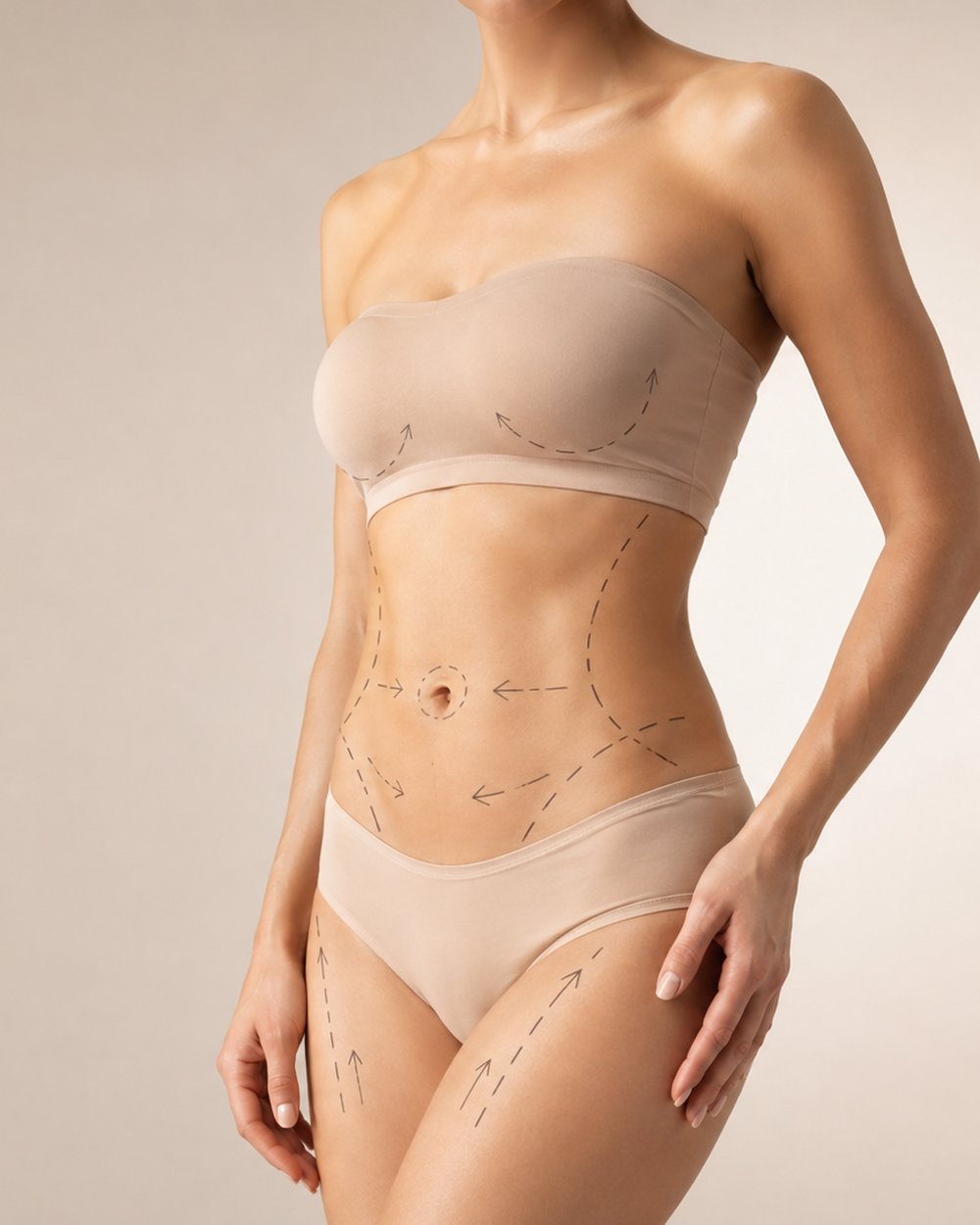
Pre-operative markings before an aesthetic body surgery procedure
Surgery time
2–4 h
Hospitalization
1 day
Return to work
approx. 3 weeks
Full effect
6–12 months

Before you decide

Plastic surgery in Turkey: how to choose safely

A decision about plastic surgery should start with a medical consultation, not with choosing a package. A specialist assesses the indications, expectations, medical history, previous surgeries, and risk factors. Photos allow for an initial assessment, but they don't replace an in-person examination.

Before you fly out, you should know the surgeon's name, where the procedure will take place, the type of anesthesia, the follow-up plan, and the procedures in place in case of complications. Flymedica coordinates the transfer of this information and the organization of the trip — the clinic is responsible for the qualification and the procedure itself.

Variants

Rhinoplasty in Turkey: types of nose surgery

The surgeon chooses the technique — open or closed — based on the structure of the nose. During the consultation the clinic may take photos and build a 3D model (e.g. with a Vectra camera) to discuss the planned profile and symmetry.

Conservative Rhinoplasty

Corrects the shape while preserving the natural structure of the bridge. The bone and cartilage structure is preserved in the upper part, while small incisions and tissue corrections are made lower down. Healing may proceed faster because the integrity of part of the tissue is preserved.

Septorhinoplasty

Changes the external shape of the nose combined with correction of the septum. Considered for issues including snoring, loud breathing, dry mouth, and fatigue caused by breathing problems. Performed under general anesthesia, 2–4 hours.

Nose Tip Correction

A procedure focused on the tip area: its projection, size, angle, and cartilage shape. It doesn't always require intervention on the bone. The clinic may also discuss non-surgical options.

Revision Rhinoplasty

A correction following a previous operation — for nostril asymmetry, a crooked or overly narrowed tip, a recurring hump, or breathing problems. Usually considered no earlier than a year after the first procedure, and more complex than the original surgery.

Closed technique — incisions made entirely inside the nostrils. No visible scar on the outside of the nose.

Open technique — an additional incision across the columella, the narrow strip of skin between the nostrils. Gives the surgeon better visibility of the structure, but may leave a small, usually barely visible scar.

The choice between techniques is the surgeon's and depends on the structure of the nose and the extent of the correction — it is not a matter of the patient's aesthetic preference.

Beyond the nose

Breast surgery, liposuction and facelift in Turkey

The clinic also offers surgeries unrelated to the nose. Each requires separate qualification and testing — combining several procedures during a single trip isn't always safe or justified, and that decision belongs to the surgeon, not the travel calendar.

Otoplasty (Ear Surgery)

Otoplasty changes the position of the ear by reshaping the cartilage. It can be performed on adults and, once medical conditions are met, on younger patients. The scope of the surgery is determined individually by the doctor after a consultation.

Breast Surgery

Includes implant augmentation, lift, reduction, and combined procedures. The choice depends on chest structure, skin quality, the amount of the patient's own tissue, and the desired result — implant size alone shouldn't be the only criterion.

Liposuction

Removes localized fat tissue resistant to diet and exercise — it is not a weight-loss method or a substitute for reducing body mass. The surgeon determines the extent of the procedure, the number of areas, and the technique (including tumescent, laser, or vibration-assisted) after assessing skin quality and fat distribution.

Face and Neck Lift

A face lift tightens sagging skin and soft tissue of the face and neck. Usually considered when there is visible loss of skin firmness and non-surgical treatments no longer produce sufficient results. The scope — from a partial facelift to a full lift including the neck — is determined individually by the surgeon.

Before the consultation

What's Worth Asking

What to Ask Before Rhinoplasty

Ask about the technique (open or closed) and the reasoning behind the choice, the planned extent of changes to the bone and cartilage, the effect on nasal airflow and breathing, the expected healing time and swelling resolution, and the terms of any revision correction if the result doesn't stabilize.

What to Ask During a Breast Consultation

During the consultation it's worth discussing the incision location, the type and profile of the implant, possible scarring, post-operative restrictions, and the risk of needing another intervention in the future. You make the final decision together with the surgeon — not the clinic on your behalf.

What to Ask Before Liposuction

Ask about the number and location of the areas covered by the procedure, the technique, the expected volume of tissue removed, and the risk of skin irregularities where elasticity is limited. The result also depends on a stable weight after the procedure — weight fluctuations can worsen it.

What to Ask Before a Face and Neck Lift

Ask about the scope of the lift (face, neck, and forehead separately or combined), the planned scar locations, the expected duration of the effect, and whether the procedure will be combined with other procedures on the same day.

Process

From Consultation to the Operating Room

Consultation Surgery

Rhinoplasty · general anesthesia

  1. Stage 1

    Pre-Operative Consultation

    The surgeon examines the structure of your nose and discusses the goals of the procedure with you. This is the moment when precisely naming your expectations matters most — a vague "I want a nicer nose" isn't enough.

  2. Stage 2

    3D Modeling

    Photos taken with a Vectra camera can be turned into a 3D model. The model is used to discuss the planned result, profile, and symmetry before the surgery.

  3. Stage 3

    Surgery

    General anesthesia, 2–4 hours. The tissue, cartilage, and bone are corrected using the open or closed method. The choice of technique depends on the structure of the nose.

  4. Stage 4

    Hospitalization and Discharge

    Usually one day in the hospital. The clinic provides post-operative instructions and a follow-up plan.

  5. Stage 5

    Follow-Up and Cast Removal, Return Home

    A follow-up visit during which the surgeon removes the cast or dressing and assesses healing. After that — the return flight to Poland.

After the surgery

A Realistic Recovery Calendar

Typical recommendations provided by clinics. Yours may differ — the ones you receive in writing take precedence.

Approximate recovery timeline after rhinoplasty.
TimeWhat to expect
Days 1–2Ice cooling. Slight bleeding or oozing is possible — contact your doctor if it's heavy or persistent.
Days 1–7Wash your hair without wetting your face. Return to about 25% of your previous exercise intensity after the first week.
Days 10–14Bruising fades. Stitches may be dissolvable and may not require removal.
Weeks 2–4Gradual return to activity: 50% after two weeks, 75% after three, full routine after four. No alcohol for the first 2 weeks, no sexual activity for 4.
Approx. 1 monthProtect the nose from impact. Light glasses are usually acceptable; thicker frames only after 6–7 weeks.
Weeks 6–8Occasional nasal congestion and visible nostril asymmetry are possible.
Months 6–12Assessment of the full healing effect and the final result.

The timeline above applies to rhinoplasty. Liposuction and face and neck lift have a different healing course — swelling and tissue firmness after liposuction can persist for several weeks, and swelling and limited facial expression after a face and neck lift usually resolve within a similar timeframe. The clinic provides the exact timeline for your chosen procedure.

Not just the nose

Stay, Recovery, and Return to Poland

The length of the stay depends on the procedure and the surgeon's decision — the timeline above applies to rhinoplasty; for breast or ear surgery the clinic sets its own follow-up plan. The plan may include the hotel, transfers, tests, the procedure, the hospital stay, follow-up visits, and an interpreter. You receive the schedule before the trip, not after landing.

After returning to Poland you should follow the recommendations regarding medication, dressings, activity, and follow-up visits. Warning symptoms require immediate contact with the clinic or local medical assistance — don't wait for your next scheduled visit. Flymedica provides organizational support and helps relay information to the doctor, but medical decisions in emergencies are made by a doctor on the ground in Poland.

Risk

Complications You Need to Know About

Every surgical operation carries risk. The clinic discusses it with you during the consultation. Below is a list of possible complications described in connection with rhinoplasty.

  • infection, which may require antibiotic treatment or another surgery,
  • severe and persistent pain,
  • permanent numbness around the nose,
  • weakened sense of smell (rare),
  • thick or abnormal scarring,
  • shortness of breath resulting from airway narrowing,
  • long-lasting swelling of the tip and sides of the nose,
  • post-operative nose deformity,
  • dissatisfaction with the result and the need for a second surgery.

Guarantee: Flymedica's guarantee procedures cover dentistry and hair transplants. None of them apply to aesthetic surgery procedures — the terms of any corrections are set individually by the clinic before the surgery. Ask about them during the consultation and request a written record. See what the guarantees cover.

Questions and Answers

Frequently Asked Questions

NoseHow long does the surgery take and how many days do I need to stay?

The surgery itself takes 2–4 hours under general anesthesia, and hospitalization is usually one day. The length of the whole stay depends on the follow-up plan set by the clinic — we arrange it before departure.

NoseWhen will I return to work?

Usually after about 3 weeks. Bruising fades in 10–14 days, but occasional nasal congestion can last 6–8 weeks.

NoseWhen will I see the final result?

Initial improvement is visible in the first weeks, but the full healing effect is assessed after 6–12 months.

NoseI'm not happy with my earlier nose surgery — what now?

Revision rhinoplasty is usually considered no earlier than a year after the first procedure, because the healing process and final assessment of the result take many months. The procedure is more complex than the original surgery — the clinic assesses on a case-by-case basis whether it can be performed.

NoseWhen can I go back to the gym?

Gradually: about 25% of your previous intensity after one week, 50% after two, 75% after three, full routine after four weeks — unless the clinic advises otherwise.

EarsAt what age can otoplasty be performed?

The procedure is sometimes performed on adults and, once medical conditions are met, on younger patients. The clinic sets the minimum age and eligibility individually.

EarsHow long do the results of otoplasty last?

The change in ear position achieved by reshaping the cartilage is usually permanent, but the final appearance is only assessed after full healing, typically after a few weeks.

BreastsHow long does healing take after breast augmentation?

Swelling and tenderness usually resolve within a few weeks, and the final breast shape stabilizes after a few months. The clinic provides the exact follow-up schedule.

BreastsWill the implant ever need to be replaced?

There's no fixed replacement date, but many years of implant use carries a risk of complications that may require reoperation. It's worth discussing the need for and frequency of check-ups with your surgeon.

LiposuctionCan fat tissue come back after liposuction?

Removed fat cells don't grow back, but if you gain weight, fat tissue can accumulate in other areas. The result therefore depends on maintaining a stable weight after the procedure.

LiposuctionHow long is the recovery after liposuction?

Swelling and bruising usually resolve within 2–4 weeks, and the final result is only visible once they've fully subsided, often after a few months.

Face and Neck LiftHow long does the effect of a face and neck lift last?

The effect of a lift is long-lasting, but it doesn't stop the natural aging process. Its durability depends on the patient's skin characteristics and lifestyle after the procedure.

Face and Neck LiftHow long is the return to work after a face and neck lift?

Visible bruising and swelling usually resolve within 2–3 weeks. The exact recovery time depends on the extent of the procedure and is determined by the clinic.

Next step

Let's talk before you decide

Book a consultation — we'll help you prepare questions for the surgeon and coordinate contact with the clinic.

This content is for informational purposes only and does not constitute medical advice. Every case requires an individual consultation. Treatment outcomes depend on individual patient characteristics and are not guaranteed.

Call Free Consultation